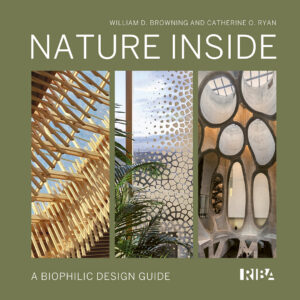
The Nature Inside Initiative
Problem Statement
Architecture is never neutral. Once we know that conceptually ‘good’ design can cause harm, we cannot in good conscience design as we once did. With the design industry’s increased awareness of the impact the built environment can have on occupant health and wellbeing has come a sincere interest in biophilic design, neuroarchitecture, and bioethics. Over the last decade, and particularly since 2020, the explosion in number of architects, designers and consultants claiming to be biophilic design experts and neuroarchitects is unprecedented. LinkedIn has an estimated 1,000–2,000 profiles boasting expertise in biophilic design and several thousand more offering biophilic design services. Before the COVID pandemic, there may have been in the ballpark of 100 profiles with such expertise.
A downside to this rapid growth is that generative AI candy and surface-level interventions reveal a shallow understanding of or focus on the opportunity, and sometimes even outright greenwashing. Owners and investors rely on experts to deliver, but inadequately informed design intents have led to design tactics that are superficial, poorly positioned or watered down, diluting the potential for architecture to have meaningful, positive health impacts to the occupants and the communities such buildings serve.
There is no lack of interest and skill; the design community is hungry for information and resources. However, architectural precedents and teachings tend to focus on additive design features or post-design critiques of a building’s ‘haves’ and ‘have-nots’, rather than leveraging design intent, design process or value creation to maximize creative and effective solutions. On the other hand, even seasoned practitioners with a robust understanding of the science and a clear design intent aren’t always able to ensure healthful design solutions make it through cost engineering exercises.
Biophilic design thinking needs to be introduced early in the architectural design process, and biophilic design strategies need to be embedded in the real estate pro forma and architectural solutions, so that occupant health can be valued rather than itemized—this is where The Nature Inside Initiative adds practical and transferable enrichment.
About Catie and Bill
Catie and Bill have been working together for 18+ years, collaborating on both building projects and writing projects. They are responsible for co-authoring a majority of Terrapin’s publications on biophilic design, including but not limited to “The Economics of Biophilia” (2012 and 2023), “14 Patterns of Biophilic Design” (2014 and 2024). See their other works on the publications page of our website: https://www.terrapinbrightgreen.com/publications/.
Project Statement
Terrapin’s own, Catie Ryan and Bill Browning, are launching The Nature Inside Initiative, a two-year independent effort to broaden awareness and deepen conversations about treating biophilic design as a public health concern. The intent is to extend biophilic thinking beyond the indoor environment; to push the industry to put nature and bioinspiration ‘inside’ every planning concept and design decision. Drawing on case studies from their new book—as well as the latest research in neuroarchitecture, architectural immunology and epigenetics, and bioethics—to inform creative problem solving for generous, net-positive built environments.
Objectives
The immediate objective is to expand the perspectives, tools, and replicable teaching models for motivated practitioners to their own projects or classrooms: Interpreting the bioethical obligation as more than “do no harm,” setting informed design intents early, identifying relationships between biophilia and other health and resilience priorities; and weighing value engineering decisions against long-term health and wellbeing. The larger objective is for health to regarded with intrinsic value in architectural and real estate decision making rather than itemized.
Project Structure
The project has two components. A public presentation draws case studies and lessons from our book Nature Inside: A Biophilic Design Guide (RIBA Publishing, 2026) and shares frameworks for engaging biophilic design in practice. As consultants, experience tells us that because biophilic buildings and communities require multidisciplinary teams, the presentation needs to be open to the public, not architects alone.
The practitioners’ workshop convenes the disciplines that touch the architectural design process, including engineers, real estate developers, and community leaders, for structured debate and problem solving. For students, early-career professionals, and the practitioners who mentor them, the material arrives at a formative moment: frameworks for teaching design and for approaching a design challenge, alongside the science needed to substantiate design solutions to clients and investors.
Standing relationships with more than two dozen universities and local chapters of the AIA, ASID, and IIDA give us ready hosts. Development of materials occupies the first two (2) months, during which the project is tested and critiqued among peers at the Mind-Body-Space Symposium in July 2027 and refined in August, with the first events scheduled for September and the remainder booked in sequence, averaging one per month.
The Nature Inside book supplies the content foundation, and the presentation and workshop will be built once, trialed, and refined, then delivered repeatedly. Materials are developed to AIA standards for continuing education and to WCAG accessibility standards, so resources remain usable after the grant period. The project can proceed without continuing education classification, though offering professional credits will draw more participants.
Grant Fund Use
Terrapin is a primary sponsor of the project, supporting time and materials for project conceptualization. Funding is sought to support the 2-year registration of the project with the AIA as a professional continuing education program, project promotion to industry networks including prospective hosts and participants, and travel and venue expenses associated with in-person presentations, including economy-grade transport, accommodations, and on-call AV/IT tech support.
Additional sponsorship is sought to extend the reach of the project, as well as a broaden the offering of workshop categories to meet the interests and needs of architecture-adjacent disciplines (e.g., real estate development, civil engineering) and sector-specific issues (e.g., hospitality, healthcare, early childhood development).
Project Impact
Occupant health is widely discussed in theory yet underrealized in practice, where competing priorities routinely displace it at the point of design and implementation. Architectural precedents tend to evaluate a finished building’s features rather than the intent and process that produced them. Business cases tend to evaluate the inputs and ROIs, not the benefits and outcomes to the user communities. This project increases transparency around the relationship between cost, value, and ethics in architectural design and construction, and equips participants to challenge conventional cost engineering and building valuation practices.
With an expected 100–200 attendees per event, the project reaches at least 800 people. Additional planned sponsorship outreach extends this to 16+ events and 3,200+ participants, with materials remaining available after the project concludes.
Practitioners can immediately apply these ideas and methods in their projects regardless of size, budget, or typology of the building. Educators and students can weave these tools and methods into their curricula and assignments, respectively. Owners and community leaders can frame their expectations for development and to seek talent with shared values. Together, they shift occupant health to the forefront of the value chain.
2027–2029 Schedule (in progress)
Conceptualization:
- 6/15/2027–7/15/2027: Initial project content development
- 7/15/2027–7/25/2027: Trial and peer review of project at Mind-Body-Space Symposium
- 7/25/2027–8/15/2027: Refine project content, submit for producer feedback
- 8/15/2027–9/15/2027: Copyediting, accessibility compliance, confirm accurate photo attribution
Realization:
- 6/20/2027–9/15/2027: Engage potential host organizations, secure ≥1 event for 11/2027–12/2027
- 9/1/2027–10/30/2027: Submit project for AIA continuing education program approval, revise as needed
- 9/1/2027–9/15/2028: Develop and test marketing campaign
- 9/15/2027–1/25/2029: Promote project, secure ≥7 events for 1/2028–4/2029
- 1/15/2028–3/15/2029: Seek additional funding to expand project reach
Presentation:
Project delivery occurs primarily in the spring and fall when academic and professional events are most sought after. The delivery schedule is evolving, including more events as additional sponsorship is secured.
- 11/1/2027–4/20/2028: Year One presentations, minimum of three
- March 2028: Biophilic Leadership Summit, The Biophilic Institute (project producer’s signature event)
- July 2028: Mind-Body-Space Symposium
- 9/15/2028–4/20/2029: Year Two presentations, minimum of five
- 4/1/2029–6/14/2029: Project conversion to a publicly accessible online resource
Contact us directly for pricing and scheduling. Corporate, institutional, and industry chapter rates available.