
 Features
What do immunology, epigenetics, biophilia, and resonance have in common?

Catie Ryan
Mind Body Space is no entry level exhibit of biophilic and regenerative design—it’s an intimate gathering of minds. Niels Hofstee and Michaël Vrijhof, the principals of Office for the New Earth (ONE), along with Nuria Muñoz Arce of Habitarmonia Academy & Ecosystem, were the co-organizers of the Mind Body Space Global Symposium in Amsterdam this past July.
In its second edition, this event was yet again an extraordinary 5-day conversation about neuroscience and environmental psychology applied to the built environment. The agenda featured lectures, panel discussions, small workshops while creating time for shared meals and deep conversations.
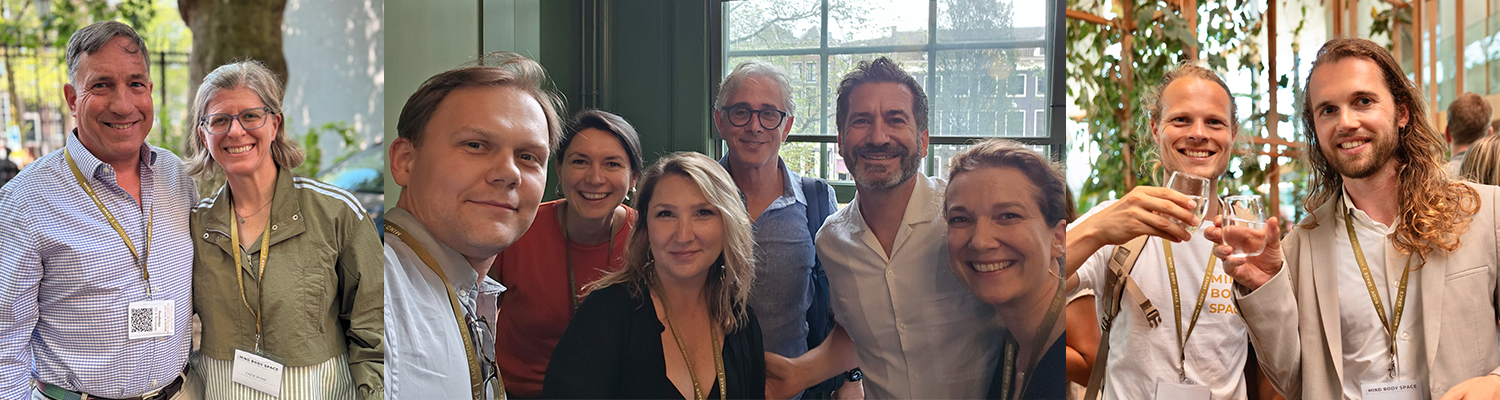
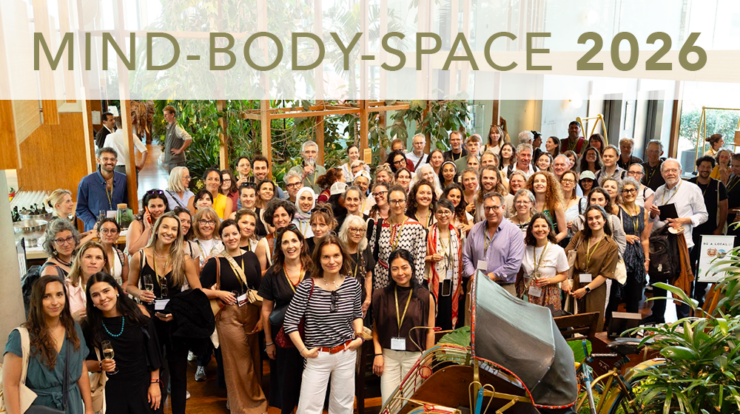
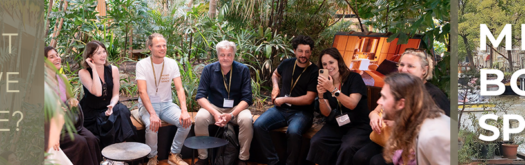
Old friends and new, gathered in Amsterdam for five days to geek out on science, design, good cheer.
Adding depth to our intergenerational commitment
The week featured nearly 40 speakers and workshop facilitators. Design researchers Cleo Valentine and Tuwanda Green touched on neuroimmunology, bioethics and epigenetics. Cleo expanded our outlook on a building’s capacity to hurt or heal, noting concepts of allostatic overload and stress-responsive genes, which piqued nearly everyone’s interest in the complex and exciting new field of architectural neuroimmunology.
Tuwanda’s human-centric perspective casts a critical eye on how we value building longevity. She urged us to see our design decisions as biological inheritances: the mental wellbeing and genetic expression of future generations depends partly on the spaces we shape today. I found her message to anchor seventh generation thinking in scientific reality.
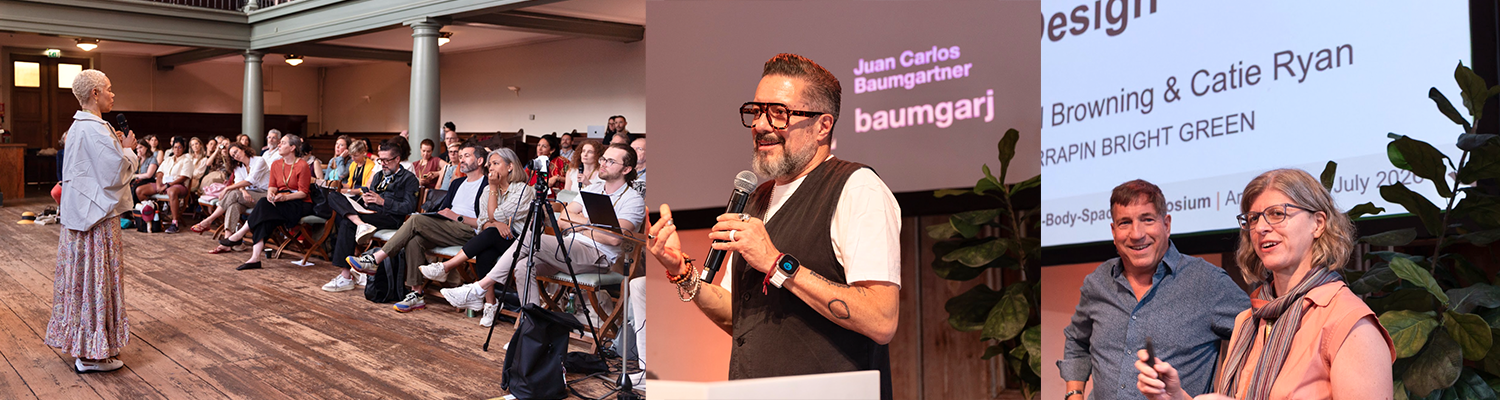
Dr. Tuwanda Green, Virginia Tech (left); Juan Carlos Baumgartner, spAce Architecture (center); Bill Browning & Catie Ryan, Terrapin Bright Green (right)
Go deeper:
– Several research papers by Cleo Valentine
– Architecture's Epigenetic Impact Through Nature Connections by Tuwanda Green
Recalculating the ‘Value’ in Value Engineering
One of the presentations that got me most excited was by Sophie Schuller, research manager at TU Delft and founder of Common Space Collective. I frequently talk about how conventional value/cost engineering practices fail to account for occupant health impacts. Sophie elevated the economics of biophilia discussion by reworking conventional building valuation calculations to introduce new valuation inputs and reframe buildings as productivity infrastructure, much as Allen and Macomber’s compelling COGfx studies did—meaning that ventilation rates, indoor air quality, daylight, and thermal comfort, as well as materials toxicity, become value-relevant metrics alongside utilities, rent, and salaries.
Abigail Scott Paul, of the Humanise campaign, spoke about the war against boring buildings and how to communicate effectively and with broader audiences to defeat the ‘blandemic’. She emphasized the importance of partnering with developers to scale the value-added health impacts – the impact potential of that message gradually sank in as the week progressed. Ann Marie Aguilar of IWBI for the EMEA region also touched on this point, stressing that investing in health pays back.
Perhaps the valuation model criteria can incorporate stakeholder mapping, engagement and co-design processes, governance structures and long-term commitments, and social outcome objectives and monitoring, as well as adjusted risk profiles based on these social-value mechanisms. How might investors, insurance providers and developers value buildings and portfolios when occupant health is actually factored into their value calculations?
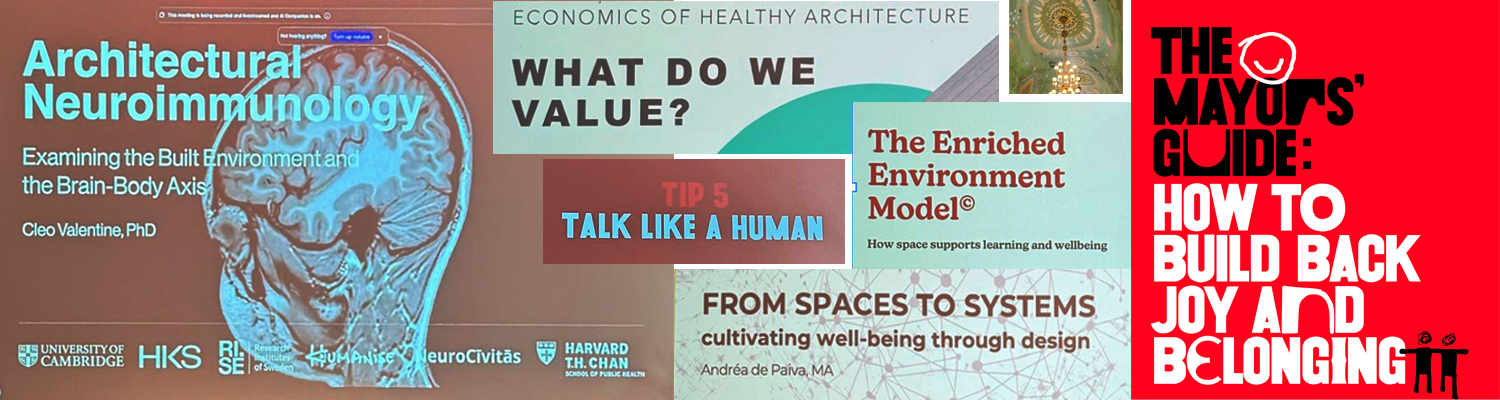
Presentations spanned from theoretical to technical, creative, introspective and instructional.
Go deeper:
– Mayor’s Guide: How to build back joy and belonging by Humanise
– Social Value Playbook by World Economic Forum and Avison Young
Architectural resonance and the lived experience
Hearing Julio Bermudez’s narrative on architecture, spirituality and awe, and Sarah Robinson’s perspectives on the Architecture of Resonance, prompted me to assess what awe and resonance meant for me—the exercise helped me understand why Mark Rothko’s paintings make me weep. (You’ll have to come find me at the Greenbuild Conference to get that back story.)
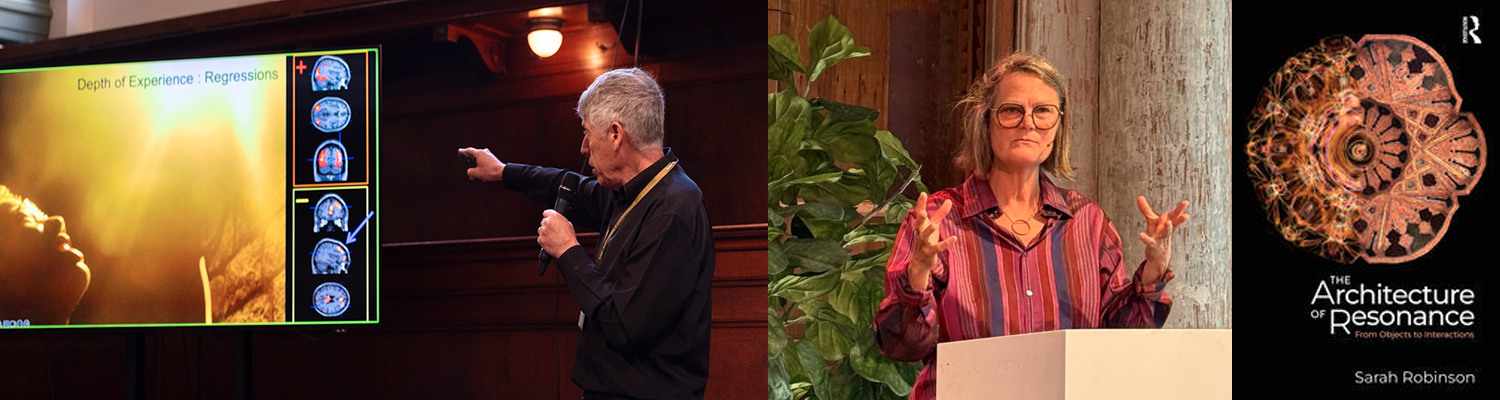
Julio Bermudez, The Catholic University of America (left); Sarah Robinson, author of The Architecture of Resonance (right)
Go deeper:
– Spirituality in Architectural Education by Julio Bermudez
– The Architecture of Resonance by Sarah Robinson
Bringing it all together
Terrapin was both a Core Partner and presenter at Mind-Body-Space 2026. Bill Browning and I tag-teamed to share our latest thinking about biophilic design in the architectural process. We also gave a walking tour focused on spatial patterns around Amsterdam’s historic city center.
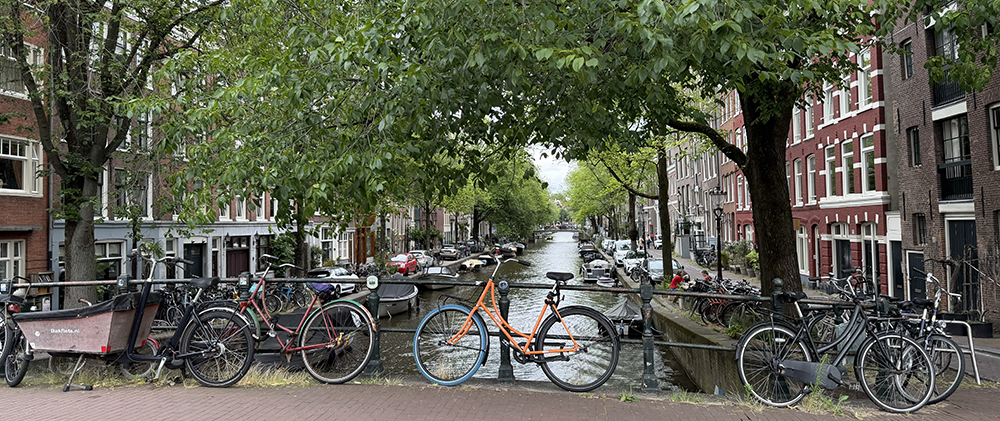
On a walking tour, we took the time to identify spatial patterns of biophilic design, like prospect and mystery, as well as the varying ways people are connected with or disconnected from the ever-presence of water, with consideration for the city’s much changed identity from a global merchant hub and to culture and innovation hub.
Together we were a passionate group of 150 from 35 countries. When reflecting on the week, it occurred to me that through immunology, epigenetics, valuation, resonance, and many other topics, we were all speaking the same language through different lenses—and it was magical.
Couple all that intellectual stuff with museum outings, boat tours, delectable meals and great conversation, the week was fun, educational, and inspiring with a bittersweet aftertaste: the realization that while there’s always more to learn, we must design our buildings for health—we know too much to do otherwise.
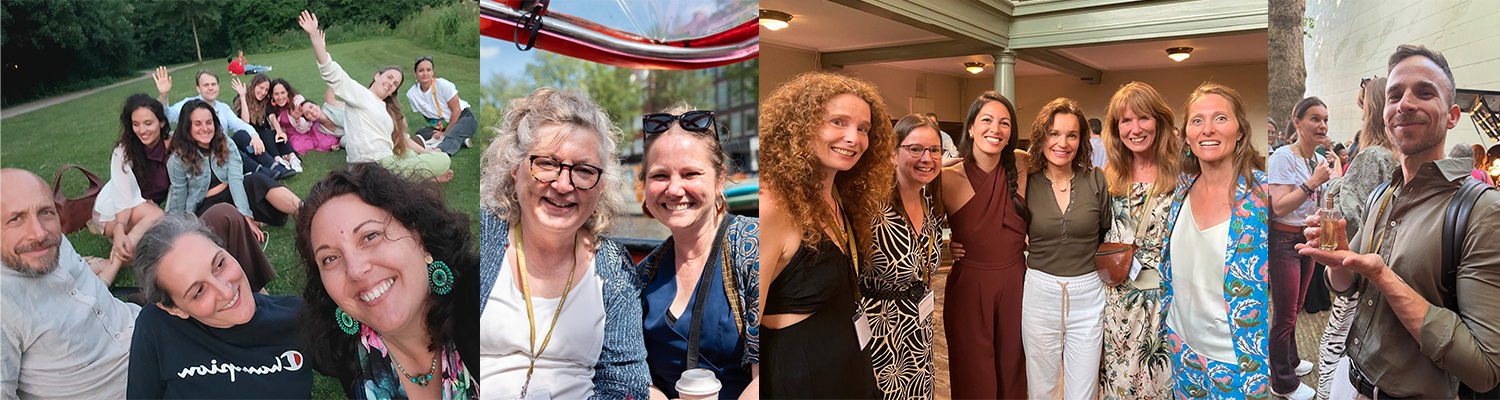
As a tight-knit group of 150 people of all ages and experiences levels were able to interact, share joy, and learn from each other.
I’m looking forward to Mind-Body-Space 2027. It promises to push the conversation further. Potential venues and dates are being evaluated now. If you’re curious, peruse the 2026 agenda and speaker line-up and stay tuned for announcements on what’s to come in 2027. We hope you join us.
Images courtesy the collective Mind-Body-Space community.
Catie Ryan
Catie is the Director of Projects at Terrapin and a leader in biophilic design movement. With a background in urban green infrastructure, Catie's interest lies in systems thinking to address human health and sustainability challenges at each scale of the built environment.
Topics
- Conference
- inspirational hero
- interior design
- connection with natural materials
- Carbon Strategy
- Transit
- Mass Timber
- Workshop
- Education
- Psychoacoustics
- biophilia
- Environmental Values
- Occupant Comfort
- Publications
- Portuguese
- French
- Hebrew
- Spanish
- Catie Ryan
- Biophilic Design Interactive
- Biomorphic Forms
- PDX
- 14 Patterns
- Dynamic Light
- Mind-Body-Space
- Epigenetics
- Neuroarchitecture
- collaboration
- fractal fluency
- fractals
- Technology
- Refuge
- Prospect
- Antoni Gaudi
- Awe
- Frank Lloyd Wright
- case studies
- wood
- Sustainability
- economics of biophilia
- Green Guidelines
- Master Planning
- Residential
- Biodiversity
- Systems Integration
- Building Performance
- Indoor Environmental Quality
- Health & Wellbeing
- Climate Resiliency
- Profitability
- Architects and Designers
- Ecosystem Science
- Institutional
- Corporations and Institutions
- Water Management
- Energy Utilization
- Resorts & Hospitality
- Net Zero
- Commercial
- Biophilic Design
- Sustainability Plans
- Greenbuild
- Community Development
- Phoebe
- Terrapin Team
- LEED
- Speaking
- Materials Science
- Carbon Neutrality
- Health Care
- Bioinspired Innovation
- Resource Management
- Industrial Ecology
- Manufacturing
- Original Research
- Product Development
- Urban Design
- Governments and NGOs
- Developers and Building Owners