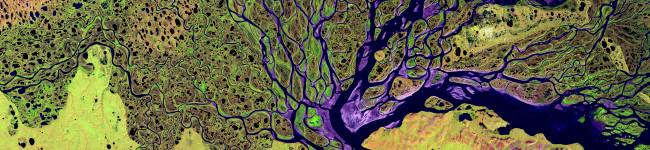
| Complexity and Order, as one of the 14 Patterns of Biophilic Design, is an analogue experience of nature. It deals with the finding the balance between a lackluster environment and an overstimulating one. Within nature, fractals are nested, mathematical patterns repeating at increasingly fine size-scales—consider tree branches, capillary riverbeds, fire flames, and crashing waves. These […] — Read More
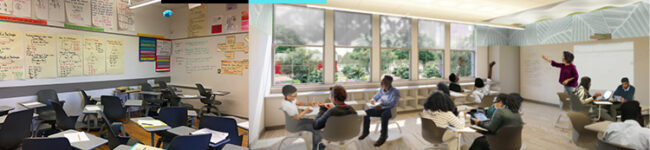
| A special issue of Architecture entitled, “Biophilic School Design for Health and Wellbeing”, Terrapin’s Bill Browning teamed up with Jim Determan of Craig Gaulden Davis Architecture to explore the results from the yearlong study of biophilic measures in a sixth grade mathematics classroom in Baltimore. Those results influenced the design of the new Bethel-Hanberry elementary […] — Read More
| Terrapin is proud to release its newest publication: “An Ear for Nature: Psychoacoustic Strategies for Workplace Distraction & The Bottom Line. — Read More
| We’re republishing The Economics of Biophilia as a six-part series with PRISM. Each installment will explore different industries and economic indicators as they relate to biophilic design. — Read More
| We’ve released two new biophilic design case studies: Östra Psychiatry Hospital in Sweden and the Parkroyal on Pickering hotel & spa in Singapore. — Read More
| Terrapin collaborated with Interface and Gensler on a series of preliminary studies. See the findings in Human Spaces 2.0: Biophilic Design in Hospitality. — Read More
| Biomimicry and biophilia are frequently confused in the sustainability world. Learn the difference between these two important concepts and take the quiz to test your knowledge! — Read More
| In an effort to expedite the broad adoption of biophilic design, I’ve been exploring ways to build evidence and communicate success of industry-relevant biophilic design precedents. These are early thoughts on how we might go about filling knowledge gaps, proving the intuitively obvious, and establishing emotional connections to the built environment. — Read More
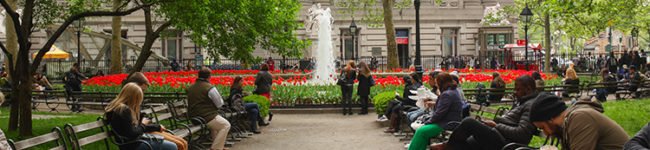
| We’ve released two new biophilic design case studies on Greenacre Park in New York and Glumac’s Shanghai office which targets Living Building Certification. — Read More
| We’ve released the first in a series of bioinspired innovation case studies exploring Terrapin’s work helping companies overcome technology challenges. Read about how HARBEC used bioinspired innovation to design more efficient plastic injection molds. — Read More
| Applying the Mystery pattern to spaces can create a user experience ripe with intrigue and creativity that enhances other biophilic interventions. — Read More
| A look at walking behavior and user experience of workers in urban environments to understand the attraction to nature and biophilia in cities. — Read More
| Terrapin has published two new case studies in biophilic design highlighting the Kickstarter Headquarters in Brooklyn and the Coeur d’Alene Resort in Idaho. — Read More
| Terrapin is excited to re-issue The Economics of Biophilia, with new biophilic projects and a note from co-authors Bill Browning and Catie Ryan. — Read More
| Bill Browning had a busy week last week! After presenting at Workplace Trends Conference, Bill had the privilege to speak at Interface UK Showroom in London about Terrapin’s latest work and research in biophilia and bioinspired innovation. If you missed his talk, be sure to watch these videos of his talk and the question and answer period below (courtesy […] — Read More
| Originally posted on Asking Nature: Biomimicry offers a strategic advantage in sustainable product design and development, and forwards innovative business. — Read More
| Catie Ryan and Joe Clancy discuss the role of biophilic design in landscape architecture in an article for Landscape Architecture Frontiers. — Read More
| Praise for Tapping into Nature: I feel that what Terrapin is doing is what might be called an inversion. Modernity made nature mechanical and industrial wherever it could, our farms forests and oceans to be sure. What you are talking about is turning industrialism into nature. It is more than tapping into something, it is […] — Read More

 Features
 News
News


 Project Profiles








 Contributions
 Quotes