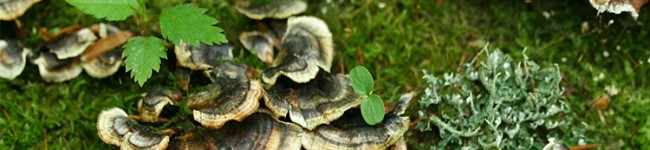
| Gaudí & Wright: Two Very Different Approaches to Biophilic Architecture Many folks probably know that I am a huge Frank Lloyd Wright fanboy and have visited several of his buildings around the US. His work continues to inspire generations of designers and contains many examples of biophilic design. I am also a fan of Antoni […] — Read More
| A special issue of Architecture entitled, “Biophilic School Design for Health and Wellbeing”, Terrapin’s Bill Browning teamed up with Jim Determan of Craig Gaulden Davis Architecture to explore the results from the yearlong study of biophilic measures in a sixth grade mathematics classroom in Baltimore. Those results influenced the design of the new Bethel-Hanberry elementary […] — Read More
| Every once in a great while, a completed project is even better than the architectural renderings. When that happens, it is an absolute thrill. This delight and joy is what we experienced when walking through the newly rebuilt terminal core of Portland Oregon’s PDX International Airport. PDX has for many years been the top-rated airport […] — Read More
| Agrihoods, neighborhoods that incorporate food production into their design, have been getting more attention in the residential development world. In many cases, these projects are conventional sprawl with a tiny community garden or orchard. Whereas, in their truest form, agrihoods weave food production into the design and experiential fabric of their communities in much more […] — Read More
| Over the years I have noticed that while good ideas come and go, truly bad ideas take on a life of their own. Some ideas even move into the realm of what Amory Lovins calls ‘spherically stupid’—stupid from any direction you look. Billionaire Charlie Munger is giving the University of California Santa Barbara $200 million […] — Read More
| This feature is a follow up to Bill’s previous post on The Journey of Sustainability. 1 September 2021 Thirty years ago today, Amory and Hunter Lovins, over the objections of some of the Rocky Mountain Institute’s board of directors, allowed a 29-year-old to launch a new program to work with real estate developers to make […] — Read More
| The green building movement and arguably the larger discussion about sustainability have progressed in scope and understanding over the last three decades. Terrapin staff have been at the heart of this journey. In retrospect, this progression can be understood as three distinct levels of sustainability, each with their own focus, and with direct and indirect benefits […] — Read More
| In this feature, Bill Browning provides his take on the growing adoption of biophilic design and ways that practitioners can expand their use of this design language. — Read More
| Environmental strategist Bill Browning shares strategies and insights on the benefits on incorporating biophilia into built environments. — Read More
| Bill discusses his own experience with natural ventilation systems, and Professor Alan Short’s timely new book, The Recovery of Natural Environments in Architecture. This work is very encouraging as it will not only lower energy costs and improve ventilation, it also offers a new level of resilience when conventional systems fail. — Read More
| Terrapin advised on sustainable building practices and biophilic design for the Rocky Mountain Institute’s new state-of-the-art Innovation Center. — Read More
| The British have a long-standing radio show in which people talk about what ten albums they would take with them to a deserted island. In that spirit, here are the ten books, a couple of chapters, and three poems that have really helped shape my thinking about our work, the environment, buildings and life. In […] — Read More
| “When the rain departs, the mosses’ sponginess retains water, then slowly releases it. Forests therefore nurture life downstream from themselves, shielding rivers from sudden muddy surges and sustaining flows during dry spells. Evaporation from the wet forest creates clouds of humidity and, if the forest is large enough, generates its own rain. We usually take […] — Read More
| Bill Browning serves as an advisor to the board for the Center for Environmental Restoration, a Washington, D.C. based non-profit organization. — Read More
| Following the “Greening of the White House” project, some of the members established Greening America, a non-profit that promotes sustainable design. — Read More
| Bill Browning, Bob Fox, and Jeff Bannon led an Environmental Opportunities Charrette to formulate a plan for optimizing the environmental performance. — Read More
| How best to measure the Park’s capacity, provide the necessary facilities, and allow more people to experience the Park without harming the ecosystem. — Read More
| Oberlin’s Adam J. Lewis Center for Environmental Studies is a building system that demonstrates concepts from the Environmental Studies curriculum. — Read More


 Features









 Project Profiles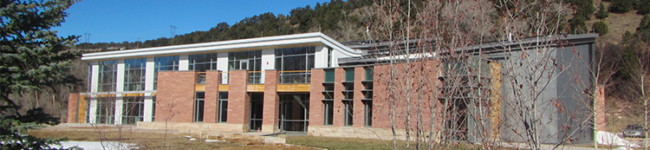


 Quotes